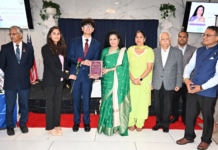

The Society of American Asian Scientists in Cancer Research (SAASCR) honored outstanding Indian American scientists for their pioneering contributions to cancer research on April 19, 2026, in San Diego. The awards were presented during the esteemed AACR (American Association for Cancer Research) Annual Meeting, highlighting transformative discoveries that are advancing the frontiers of cancer diagnosis, treatment, and patient care.
The Society of American Asian Scientists in Cancer Research (SAASCR) is a non-profit, non-political organization established in 2004 and registered in the state of California, with a distinguished membership of over 5,000 scientists. All SAASCR members are also affiliated with the American Association for Cancer Research (AACR). The organization comprises leading cancer researchers of Asian origin—predominantly of Indian descent—who are actively contributing to cutting-edge cancer research across the United States and Canada, with strong support from the biotechnology industry.
Dr. Rajvir Dahiya, the president of SAASCR, and Dr. Dharam Pal Chauhan, secretary of SAASCR presented awards to these scientists on April 19th, 2026, in San Diego, California during American Association for Cancer Research Annual Meeting. Dr. Rajvir Dahiya is Professor Emeritus at the University of California, San Francisco (UCSF) School of Medicine, and Dr. Dharam P. Chauhan is a retired Professor from the University of California, San Diego (UCSD) School of Medicine. Their leadership and longstanding contributions to cancer research continue to inspire excellence within the global scientific community.
Dr. Gagan Deep, Ph.D. Dr. Gagan Deep, Ph.D., is a Professor at the Wake Forest University School of Medicine and an internationally recognized biomedical scientist whose research is at the forefront of extracellular vesicle–based liquid biopsy technologies for precision medicine. His workplaces particular emphasis on cancer and aging-related diseases, aiming to develop minimally invasive approaches for disease detection, characterization, and monitoring.
Dr. Deep earned his Ph.D. from the Jawaharlal Nehru University in 2004. He began his academic career at the University of Colorado, where he served from 2004 to 2016, before joining Wake Forest School of Medicine, where he currently holds a full professorship in the Department of Medicine. His research focuses on tumor-derived small extracellular vesicles—nano-sized particles released into blood and other biofluids—as a powerful, non-invasive source of cancer-specific molecular information. His laboratory has been a leader in demonstrating that these circulating vesicles carry oncogenic proteins, RNA, DNA, and hypoxia-related signatures that faithfully reflect tumor biology, disease aggressiveness, and therapeutic resistance. This work has significant implications for challenging malignancies such as glioblastoma, pancreatic cancer, and metastatic prostate cancer, where traditional tissue biopsies are often difficult or risky.
A major translational thrust of Dr. Deep’s program is the development of blood-based liquid biopsy platforms that enable molecular profiling of tumors, identification of actionable mutations, and real-time monitoring of disease progression and treatment response—reducing reliance on invasive surgical procedures and enabling more dynamic clinical decision-making. Beyond oncology, Dr. Deep has expanded the application of extracellular vesicle–based diagnostics to a broad spectrum of aging-associated and chronic conditions. His pioneering studies using brain cell–specific extracellular vesicles isolated from blood have provided novel insights into Alzheimer’s disease and related dementias, offering a window into brain-derived molecular changes in living patients. His work also extends to aging-related mobility decline, obesity-associated metabolic dysfunction, brain insulin resistance, chronic pain, and cardiovascular diseases such as hypertension.
Dr. Deep has authored more than 140 peer-reviewed publications and has received sustained funding from the National Institutes of Health, the United States Department of Defense, and other nationally competitive funding bodies. His contributions have also resulted in patented technologies in extracellular vesicle–based diagnostics. Through his innovative, interdisciplinary, and translational research, Dr. Deep continues to advance the field of liquid biopsy across oncology and aging-related diseases, with the goal of developing scalable, patient-friendly diagnostic tools that enhance clinical decision-making and improve patient outcomes.
Dr. Muthusamy Thangaraju, Ph.D., is a Professor in the Department of Biochemistry and Molecular Biology, Medical College of Georgia at Augusta University, Augusta, GA. Dr. Thangaraju is an internationally renowned cancer biologist with more than 100 peer-reviewed publications in well-reputed journals, 4 book chapters, 5 patents, and has presented more than 230 abstracts at various national and international conferences, with an h-index of 55, an i10-index of 93, and 13576 citations. Dr. Thangaraju’s laboratory has focused on chemoprevention and treatment of breast and colon cancers. His laboratory is well funded by the National Cancer Institute (NCI), National Institute of Diabetes and Digestive Diseases (NIDDK), Department of Defense (DOD), American Cancer Society, and Polycystic Kidney Disease (PKD) foundation for both cancer and benign diseases, with an emphasis on novel experimental therapeutics and combination therapies. His laboratory established the functional link between colonic metabolites and their role in colon and breast cancer prevention. His laboratory also established the functional role of DNA methylation in regulating breast cancer stem cells and in breast cancer prevention. His laboratory has demonstrated how the longevity gene, SIRT1, impacts breast cancer growth and metastasis. His laboratory has also been established to study the functional role of colonic metabolites in the prevention and treatment of autosomal dominant polycystic kidney disease (ADPKD). Dr. Thangaraju’s laboratory has generated various animal models to study the pathophysiology of breast, colon, and lung cancers, as well as ADPKD.
Dr. Thangaraju earned B.Sc. and M.Sc. in Chemistry from Bharathidasan University, Thanjavur, India, and a PhD from the University of Madras in Medicinal Biochemistry with an emphasis on the role of antiestrogens in the treatment of breast cancer. Did a post-doctoral fellowship at the Royal Victoria Hospital, McGill University, Montreal, Canada, and Mayo Clinic and Foundation at Rochester, USA. As a tenured Professor at Augusta University, he guided 5 graduate students, 4 medical students, 6 allied health students, 2 STAR students, 6 undergraduate students, 5 post-doctoral fellows, and 2 visiting scientists. Dr. Thangaraju’s work, especially on novel therapeutics for breast cancer, has generated significant media attention. Dr. Thangaraju is highly collaborative throughout MCG, Augusta University, and several institutions across the United States. One of his patents was licensed to a biotech company to prepare a ketogenic diet for the ADPKD patients.
Dr. Natarajan Aravindan, Ph.D., is a Professor of Physiological Sciences at Oklahoma State University, Kerr Endowed Chair for Biomedical Laser and Bio-photonics Research, Williams Companies Foundation Presidential Professor, and Founding Director of the All‑of‑Us Research and Education Program. He also serves as Director of Molecular Oncology and Radiation Biology Research and holds adjunct faculty appointments in Radiation Oncology and Pathology at the University of Oklahoma Health Sciences Center, where he is a member of the NCI‑designated Stephenson Cancer Center Cancer Biology Program.
Dr. Aravindan leads an internationally recognized molecular oncology and radiation biology research program focused on therapy resistance, tumor evolution, immune evasion, and aggressive solid cancers, particularly high‑risk and progressive pediatric cancers. His work established Retinal Degeneration Protein‑3 (RD3) as a master regulator of tumor plasticity, immune silence, and adverse clinical outcomes, redefining biological paradigms of treatment failure and disease progression across neuroblastoma and multiple adult malignancies, including bladder, breast, ovarian, and pancreatic cancers. His laboratory has pioneered tumor‑targeted molecular and peptide‑based therapies, precision nanotherapy, and radio‑immunotherapeutic strategies, alongside innovative cell‑specific and transgenic preclinical models that bridge mechanistic discovery and translational application. Dr. Aravindan’s research has been continuously funded by competitive federal and foundation support, including high‑impact awards from the U.S. Department of Defense, NIH, Kerr Foundation, Oklahoma Center for the Advancement of Science and Technology, institutional programs to name a few. His work has resulted in over 100 peer‑reviewed publications in high‑impact journals with frequent first‑ and senior‑author contributions. In addition to his research leadership, Dr. Aravindan has made sustained contributions to the national and international cancer research community through editorial leadership (Editor‑in‑Chief and Lead Guest Editor roles), NIH and DOD study‑section service, and advisory roles for funding agencies in the United States, Europe, and Asia. He is widely invited as a keynote and plenary speaker at major scientific meetings, including AACR, Radiation Research Society, and international oncology and pediatric cancer forums.
Dr. Aravindan received his Ph.D. in Microbiology from Andhra University, following earlier training in pathology, cell & molecular biology, genetics and biophysics at Pondicherry University. His postdoctoral training was completed in cancer critical care and radiation oncology at UT MD Anderson Cancer Center and the University of Texas Health Science Center at San Antonio. He has trained generations of graduate students, postdoctoral fellows, and early‑career faculty, many of whom have received AACR, Radiation Research Society, NASA, and institutional fellowships and national honors.
Dr. Suresh K. Alahari, Ph.D., is a Professor of Biochemistry and Molecular Biology at LSU Health Sciences Center New Orleans, where he holds the prestigious endowed title of “Fred G. Brazda Professor.” He is also a full member of the LSU-LCMC Cancer Center and serves as Professor of Genetics at LSU Health, reflecting his broad impact across cancer biology and molecular medicine. Dr. Alahari completed his B.Sc. and M.Sc. degrees at Andhra University and conducted early research as a fellow at All India Institute of Medical Sciences. He earned his Ph.D. from Drexel University and pursued postdoctoral training at the University of North Carolina at Chapel Hill, where he later served on the faculty as an Assistant Professor. He has also held visiting professorships at the University of Pennsylvania and Rockefeller University.
A highly accomplished investigator, Dr. Alahari has maintained continuous research funding for over two decades from the National Institutes of Health, Susan G. Komen, and multiple state and local agencies. His research contributions include the discovery of the gene Nischarin—named from Sanskrit—which has become the focus of several of his seminal publications in cancer biology. Dr. Alahari’s academic impact is equally distinguished. He has authored more than 100 peer-reviewed publications and delivered approximately 170 invited lectures across over 50 countries. A dedicated educator and mentor, he has trained around 70 graduate students and postdoctoral fellows in breast cancer research and has taught more than 3,500 medical and 350 dental students.
In recognition of his scientific excellence, Dr. Alahari has been ranked among the top 2% of researchers worldwide based on 2025 data compiled by Stanford University. He has also been recognized as one of the top 30 professionals in New Orleans (2012). His honors include the Outstanding Faculty Award for Community Service (2016) and the Outstanding Faculty Award for Exemplary Institutional Service (2026) from LSU Health Sciences Center. Dr. Alahari is an elected Fellow of the American Association for the Advancement of Science and the American Society for Cell Biology, underscoring his national and international standing in biomedical research. In addition to his scientific and educational contributions, Dr. Alahari has played a key leadership role in academic administration. He has served multiple terms as Acting Head of the Department of Biochemistry at LSUHSC and currently chairs the Appointments and Promotions Committee for the School of Medicine, as well as the Faculty Selection Committee for the School of Graduate Studies. Extending his impact beyond academia, he recently founded Vensaras Pharma LLC, translating his scientific discoveries into potential therapeutic innovations.
Dr. Manjeet K. Rao, Ph.D., is a Professor and Deputy Director of the Greehey Children’s Cancer Research Institute at The University of Texas Health San Antonio. He also serves as the Co-Leader of the Experimental and Developmental Therapeutics Program at the Mays Cancer Center (NCI-designated). He holds the Greehey Distinguished Chair in Pediatric Hematologic Malignancies and is Director of the Cancer Biology Discipline within the Integrated Biomedical Sciences Graduate Program. Dr. Rao received his M.S. and Ph.D. degrees from the University of Delhi, India, and completed his postdoctoral training at The University of Texas M.D. Anderson Cancer Center, Houston, Texas
He leads a highly impactful translational research program focused on drug development, immune-oncology, epi-transcriptomics, tumor–microenvironment, and cancer vaccines in pediatric and adult cancers. His work has uncovered fundamental mechanisms by which tumor-intrinsic and extrinsic factors regulate tumor growth, immune evasion, and therapeutic resistance, and has led to the development of novel therapeutic strategies, including immunogenic peptide-based cancer vaccines and repurposed drugs, several of which are currently being evaluated in ongoing clinical trials. Dr. Rao’s research has been continuously funded by the NIH for over two decades, along with major support from NCI, CPRIT, and national foundations, and has resulted in high-impact publications in journals such as Cell, Nature Communications, Science Advances, PNAS, and Genes & Development, as well as multiple patents for innovative cancer therapeutics. Through his leadership, mentorship, and collaborative efforts, Dr. Rao continues to advance discoveries that bridge fundamental biology with clinical translation to improve outcomes for cancer patients.
Dr. Erxi Wu, Ph.D. is a cancer biologist and neuroscientist whose work has earned national and international recognition. He is a Professor at Baylor College of Medicine (BCM), Vice Chair for Research in the Department of Neurosurgery at BCM–Temple, Deputy Director of the Neuroscience Institute at Baylor Scott & White Health (BSWH), and Chief of Neuro-Oncology Research at the BSWH Neuroscience Institute. He also serves as a Clinical Professor at Texas A&M School of Medicine and as an Affiliate Professor in the Cancer Research Center and Department of Internal Medicine at Dell Medical School, University of Texas at Austin (UT Austin). Dr. Wu is the Principal Investigator and Director of the CPRIT-funded Cancer Agent Target Discovery and Aptamer Development (CATDAD) Core at BSWH. His research program focuses on biomarker development, therapeutic target identification, and the discovery of novel treatments for cancer and neurodegenerative diseases. His notable achievements include the identification of agents targeting cancer stem cells, the establishment of a comprehensive biomarker analysis platform, and significant advances in understanding the pathology of neurodegenerative diseases.
Dr. Wu earned his Ph.D. from the University of Sheffield, UK, under the tutelage of Professor Graham Russell, and completed postdoctoral training with Professor Margaret Shipp at the Dana-Farber Cancer Institute, Harvard University. He has published 200 peer-reviewed scientific papers, many in high-impact journals such as Signal Transduction and Targeted Therapy, Nature Medicine, Nature Methods, Molecular Cancer, Bioactive Materials, Journal of the American Chemical Society, Nature Communications, Journal of Clinical Investigation, Brain, Molecular Therapy, and Science Advances, with over 10,900 citations and an H-index of 59. Supported by grants from the NIH, CPRIT, and other funding agencies, his work extends to the broader scientific community through service as an NIH study section reviewer since 2017 and editorial roles with journals including Genes & Diseases and Drug Resistance Updates. He has reviewed for over 150 scientific journals, delivered more than 40 invited seminars worldwide, and introduced Nobel Laureates at major scientific conferences. Mentorship is a central component of his career; he has trained and guided over 80 professionals in academia and industry.
Dr. Sattva Neelapu, M.D., is a Professor in the Department of Lymphoma and Myeloma at The University of Texas MD Anderson Cancer Center. An internationally acclaimed physician-scientist, Dr. Neelapu has made transformative contributions to cancer immunotherapy—particularly in the development and clinical translation of chimeric antigen receptor (CAR) T-cell therapy—redefining the treatment landscape for lymphomas and setting global benchmarks for translational research. Dr. Neelapu received his MBBS from Jawaharlal Institute of Postgraduate Medical Education and Research. He completed his clinical internship in Internal Medicine at Coney Island Hospital (1992–1995), followed by a fellowship in Medical Oncology at the National Cancer Institute (1998–2004). Since joining MD Anderson in 2004, he has demonstrated exceptional leadership across clinical care, research, education, and mentorship. His work exemplifies the very essence of translational medicine—bridging laboratory discoveries to clinical application and significantly improving patient outcomes worldwide.
Over the past decade, Dr. Neelapu’s laboratory has filed 15 patent applications encompassing novel CAR targets (including CD79b, CD94, CXCR5, KIR3DL2, and ROR1), multi-antigen nano-CAR constructs, bispecific CAR platforms, a novel allogeneic cell therapy approach, and an innovative safety switch for universal cell therapies. Several of these cutting-edge technologies are advancing toward FDA Investigational New Drug (IND) applications and clinical trials, underscoring his sustained innovation and commitment to advancing next-generation cancer therapies. His research program is supported by multiple prestigious grants, including four active R01 or R01-equivalent awards, a Cancer Prevention and Research Institute of Texas Multi-Investigator Research Award and a United States Department of Defense Convergent Science Cancer Consortium award with total support exceeding $30 million, where he serves as Project Leader. He also plays a key role in two MD Anderson Moon Shot programs focused on B-cell lymphoma and T/NK-cell malignancies. These accomplishments reflect the strong confidence of major funding agencies in both his scientific vision and the far-reaching impact of his work.
Beyond his scientific achievements, Dr. Neelapu is a dedicated mentor and educator who has profoundly influenced the next generation of physician-scientists. He has authored more than 300 publications, with over 50,000 citations and an h-index of 92. His mentorship has guided numerous fellows, postdoctoral researchers, and graduate students, including Ph.D. candidates at the UT Graduate School of Biomedical Sciences. His trainees have earned at least 15 career development awards in the past five years, including honors from American Society of Clinical Oncology, Lymphoma Research Foundation, American Society of Hematology, and the Leukemia and Lymphoma Society. In recognition of his outstanding mentorship, he received the Mentor of the Year Award in 2023. Internationally, Dr. Neelapu is a highly sought-after speaker, delivering invited lectures at premier scientific forums, including annual meetings of ASH, ASCO, American Society for Transplantation and Cellular Therapy, and American Association for Cancer Research, as well as at institutions across more than 25 countries. He has been named a Highly Cited Researcher by Web of Science for three consecutive years (2023–2025), placing him among the top 0.1% of scientists globally and among a select group of lymphoma experts worldwide. His recent honors include the President’s Recognition of Faculty Excellence in Research (2023), election as a Fellow of the American Association for the Advancement of Science (2024), and the Otis W. and Pearl L. Walters Faculty Achievement Award in Clinical Research (2024)
Dr. Rafi Ahmed, Ph.D., is a distinguished Professor and Director of the Emory Vaccine Center at Emory University School of Medicine. An elected member of the National Academy of Sciences, he is internationally recognized as a pioneering immunologist whose groundbreaking work has profoundly advanced our understanding of memory T cell differentiation and antiviral T and B cell immunity.
Dr. Ahmed earned his Ph.D. from Harvard University in 1981, following his B.S. and M.S. degrees from Idaho State University. His research is driven by a long-term vision to elucidate the fundamental mechanisms governing B- and T-cell immunological memory and to translate these insights into innovative vaccines for the prevention and treatment of infectious and chronic diseases. The Ahmed laboratory employs cutting-edge cellular and molecular approaches to investigate antigen-specific immune memory across murine, primate, and human systems. With over 600 high-impact, peer-reviewed publications, Dr. Ahmed’s scholarly influence is exceptional, reflected in an h-index of 183 and more than 140,000 citations.
A central focus of his research is the identification of key molecular regulators of CD8 and CD4 T-cell responses and humoral immunity. His seminal work identified mTOR as a critical regulator of memory CD8 T-cell differentiation. In addition, his laboratory has made transformative contributions to understanding T-cell dysfunction in chronic viral infections such as HIV and Varicella-zoster virus (VZV). Notably, his team’s discovery of the inhibitory receptor PD-1 as a major mediator of T-cell exhaustion marked a paradigm shift in immunology. This breakthrough directly enabled the development of PD-1–targeted therapies, which are now widely used in the treatment of chronic infections and cancer.
Building on this foundation, Dr. Ahmed’s group continues to explore additional inhibitory pathways, as well as the roles of follicular helper CD4 T cells, memory B cells, and antibody responses in chronic infections. His laboratory is also at the forefront of humoral immunity research, including the co-development of innovative methods for rapidly generating human monoclonal antibodies following vaccination. These studies have demonstrated the induction of broadly cross-reactive antibodies capable of recognizing multiple influenza strains, offering promising pathways toward the development of a universal influenza vaccine.
Dr. Ahmed’s research program is supported by substantial funding from the National Institutes of Health and other major agencies, with total support exceeding $50 million. A highly sought-after speaker, he has delivered numerous invited lectures at national and international forums. In addition to receiving many prestigious honors, Dr. Ahmed has mentored and trained many fellows and visiting scientists, contributing significantly to the next generation of leaders in immunology.
Dr. Shobha Srinivasan, Ph.D., serves as a Senior Advisor in the Office of the Director at the Division of Cancer Control and Population Sciences within the National Cancer Institute. In this leadership role, she coordinates and advances strategic initiatives across DCCPS, NCI, the National Institutes of Health, as well as with federal and non-governmental partners, to design and implement programs aimed at improving population health and reducing health disparities.
Dr. Srinivasan earned her Ph.D. from Loyola University Chicago in 1990. Over the course of her distinguished career, she has received numerous honors recognizing her sustained excellence and impactful contributions. These include the Dr. Phillip R. Smith Award (2014), which acknowledges exemplary support for research in Native communities through funding, policy development, and capacity-building efforts; the NIH Merit Award for her leadership in education and obesity initiatives; and the United States Department of Health and Human Services Award (2003) in recognition of consistently high-quality performance. She has also received a Special Performance Award from the Office of the Dean, College of Letters and Science at the University of California, Davis for her continued outstanding contributions.
Through NCI-funded programs, Dr. Srinivasan has been instrumental in fostering collaborative partnerships between academic institutions and community organizations to address pressing public health challenges. Her work emphasizes community-engaged research approaches that strengthen the link between science and real-world health outcomes.
Prior to her current role, Dr. Srinivasan held academic positions at multiple universities and served as a research director within a community-based health organization, further broadening her impact at the intersection of research and practice. Her scientific portfolio focuses on the social determinants of health, including the influence of place, access to care, and utilization of health services. Across her body of work, she has consistently aimed to generate evidence that informs health policy at local, state, and national levels, ultimately contributing to more equitable and effective healthcare systems.
Address and email of the awardees:
- Gagan Deep, Ph.D.
- Professor of Internal Medicine
- Wake Forest University
- School of Medicine
- Winston-Salem, NC 27101
- Email: [email protected]
- Muthusamy Thangaraju, Ph.D.
- Professor of Biochemistry and Molecular Biology
- Medical College of Georgia
- Augusta University, GA 30809
- Email: [email protected]
- Natarajan Aravindan M.Sc., MPhil., Ph.D., C.C.A
- Professor and Kerr Endowed Chair
- Director, Molecular and Radiation Oncology Research
- Department of Physiological Sciences
- College of Veterinary Medicine,
- Oklahoma State University. Stillwater, OK 74078.
- Email: [email protected]
- Suresh K Alahari, Ph.D., FAAAS, FASCB
- Professor, Biochemistry and Molecular Biology
- Stanley S Scott Cancer Center
- LSUHSC, New Orleans, LA 70112
- Email: [email protected]
- Manjeet K Rao, Ph.D.
- Professor and Deputy Director
- Greehey Distinguished Chair in Pediatric Hematologic Malignancies
- Greehey Children’s Cancer Research Institute
- The U.T. Health Science Center
- San Antonio, TX 78229
- Email: [email protected]
- Erxi Wu, Ph.D.
- Professor and Vice Chair for Research,
- Department of Neurosurgery, Baylor College of Medicine, Temple
- Chief, Neuro-Oncology Research, Baylor Scott & White Health
- Temple, TX 76502
- Email: [email protected]
- Sattva S. Neelapu, MD
- Professor and Deputy Chair, Lymphoma / Myeloma
- The University of Texas
- M.D. Anderson Cancer Center
- Houston TX 77030.
- Email: [email protected]
- Rafi Ahmed, Ph.D.
- Charles Howard Candler Professor and
- Director, Emroy Vaccine Center
- Emory University School of Medicine
- Atlanta, GA 30322
- Email: [email protected]
- Shobha Srinivasan, Ph.D.
- Senior Advisor, Office of the Director
- Division of Cancer Control and Population Science
- National Cancer Institute, NIH
- Rockville, MD 20852
- Email: [email protected]